
How to Measure Sleep Quality: Moving Closer to the Brain for Better Outcomes
By Ellen Stothard, PhD, Chief Science Officer
The Measurement Gap in Sleep Medicine
When evaluating overall health, clinicians must consider sleep and, therefore, sleep quality. Sleep is fundamentally a neurological process—driven by electrical activity in the brain. Yet, the way we currently measure sleep often fails to reflect the nuances of this reality.
Today, sleep disorders are primarily assessed through two modalities: in-lab polysomnography and home sleep apnea testing. Each has its benefits and drawbacks: In-lab studies provide high-quality data but are resource-intensive, costly, and limited to a single night—an inherently narrow snapshot of a highly variable biological process. Home-based testing improves accessibility and allows patients to sleep in their natural environment, but it comes with a critical limitation: it does not directly measure brain activity. Instead, it relies on indirect physiological signals collected from sites far removed from the brain.
Wearable devices extend this model further. While they offer longitudinal data, they are typically worn on the wrist or finger, locations too distant from the source of sleep itself. As the distance from the brain increases, the signal quality decreases. In practical terms, this means we often attempt to interpret the results of a sleep study without directly measuring the organ that produces the baseline signal.
Compounding this issue, a single night of data—regardless of quality—is not always representative of an individual’s typical sleep. Yet, scaling high-fidelity measurements across multiple nights has not been feasible within traditional clinical frameworks.
When the Data Doesn’t Match the Patient
When sleep is measured indirectly, the resulting data can be misleading.
Consumer wearables, for example, are optimized to detect sleep onset and general patterns but rely heavily on predictive algorithms trained on healthy populations. As a result, they are biased toward identifying sleep, especially when it occurs following daytime wakefulness, but less accurate at identifying wakefulness when it follows sleep.
For patients with underlying sleep disorders, this creates a disconnect: individuals may feel unwell and unrested, while their device reports “normal” sleep. This mismatch can delay care, undermine trust in clinical evaluation, and contribute to underdiagnosis.
In clinical contexts, relying on imperfect data can lead to misguided decision-making. If the underlying signal is inaccurate, the conclusions drawn from it are inherently limited.
There is also a broader systems-level consequence. Entire patient populations, particularly those with nonspecific sleep-wake complaints, remain underserved. These individuals often do not meet the threshold for traditional diagnoses, yet they experience meaningful impairment in daily functioning. Without accurate, scalable tools, they are left in a diagnostic gray zone.
How to Measure Sleep Quality:
A Shift Toward Brain-Based Sleep Measurement
A new approach to sleep measurement is emerging. It prioritizes proximity to the brain while maintaining accessibility and scalability.
Advances in in-ear electroencephalography (EEG) technology make it possible to capture high-fidelity brain signals from a form factor that is both lightweight and suitable for home use. By positioning sensors closer to the brain, specifically near structures critical for sleep regulation, these devices offer a more direct and accurate representation of sleep architecture and, thus, sleep quality.
Importantly, this approach enables multi-night data collection without sacrificing signal quality. Patients can be monitored in their home environment over extended periods, providing a more comprehensive and representative view of their sleep.
This shift unlocks several key opportunities:
Longitudinal, high-quality data outside the sleep lab
Improved diagnostic precision, particularly for complex or nonspecific cases
Objective measurement of treatment efficacy
Expansion of care to underserved populations, including those who do not traditionally seek clinical evaluation due to barriers to access
It also aligns with a broader movement toward personalized medicine—where treatment decisions are informed by continuous, individualized data rather than isolated snapshots.
Building the Next Generation of Sleep Care
To realize this opportunity, Rebis Health has partnered with Zircadia to bring next-generation sleep technology into clinical and real-world settings.
Zircadia has developed an in-ear EEG device designed to capture brain activity during sleep with high fidelity, while remaining comfortable and practical for nightly use. This technology builds on research developed in collaboration with the University of Colorado and CU Venture Partners, combining scientific rigor with scalable design and commercialization.
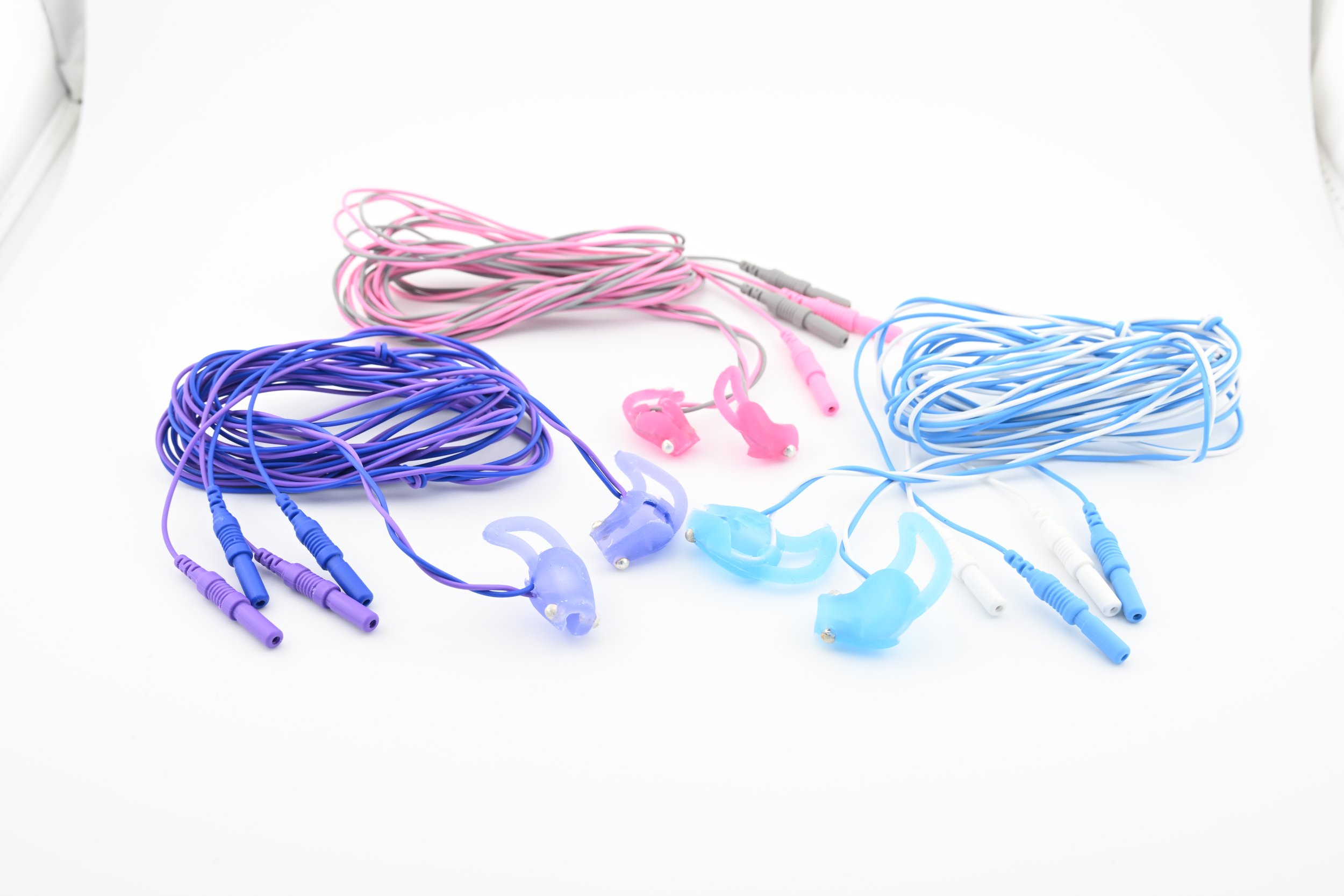
Zircadia in-ear EEG devices.
Through this partnership, Rebis Health contributes extensive expertise in sleep medicine, clinical validation, and patient-centered care. Zircadia brings engineering innovation and device development capabilities. Together, the goal is to bridge the gap between laboratory-grade data and real-world usability.
“Working with Rebis allowed Zircadia to bring a laboratory-based technology into a real-world clinical setting in record time. Early exposure to a high-level clinical environment helped us refine both the device design and signal analysis, ultimately increasing the value delivered to patients and clinicians. Most clinical settings are not equipped to integrate early-stage technology, but Rebis’ experience across both research and patient care makes them uniquely positioned to do so.”
— CEO & Founder, Zircadia
In practice, this solution enables:
Pre-clinical assessment, allowing patients to generate meaningful data before entering the clinic
Ongoing treatment evaluation, with objective measures of whether interventions are working
Personalized care pathways, informed by individual sleep patterns over time
Early access and validation, with patients participating in upcoming pilot and beta programs
Ultimately, this collaboration supports a broader vision: advancing sleep medicine beyond episodic testing toward continuous, brain-based measurement. By doing so, we can better serve not only those with clear diagnoses but also the large and often overlooked population experiencing unresolved sleep challenges.
